The day before
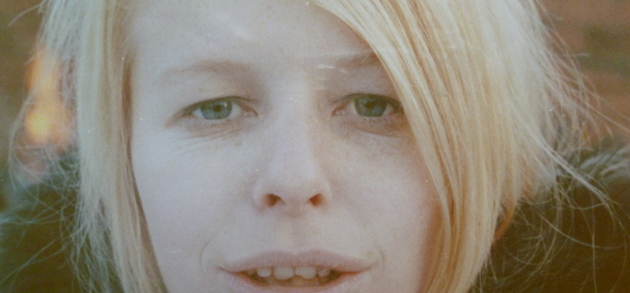
I’m here—or more exactly, I’m not, for it all seems too strange; this journey to see an image from the past. And the city is quiet—as though it was itself waiting for the appointed hour. And here, on fortified castle ramparts, beneath an old lighthouse, I stare out into the silver harbour—the grumble of ferries against the late afternoon sun, ships lying at anchor out to sea, boys playing football. The fort was built by Henry XIII, so a notice says—that means it is over five hundred years old, built to keep the French out, I suppose. Everywhere benches with memorial plaques, the occasional wreath—testimony to those loved, now dead, almost forgotten. Like my image—the beautiful girl with the full lips, the bright eyes, the keenness, the long straight hair, the freckles. Has she been forgotten? Will she be forgotten? Were the freckles really hers? I realise I have nothing to say to her. What could I possibly say? P. half thinks I might not come back—“If she’s tall and slim, and rich”. But she’s wrong, of course. We all go back—there is nowhere else to go. The start of a journey is no different than the end. But I am changed here—I know that—and that is where it goes, not back, not forward, but into change. This is not a consolidation, for there is nothing to consolidate, but I am not here and that is a change.
Two hours to go
Two hours to go. What extraordinary tension. It is pouring with rain—a gale blowing in from the sea, now obscured in a grey mass of wet cloud. I can hear the world—everything caught up in the blast and turmoil of the storm.
And I am in a storm too. I don’t want to see this girl—I don’t want to be the boy again. And yet I know it must be. I have barely changed—as if there is not enough time in a single life to change that much. I will be reminded that years in time mean nothing—that I may as well have stayed there, in the past, not pretending that there was somewhere to go.
A manager in a suit, full of pride and swagger, checks the silver containers of breakfast items—sausages bacon, fried eggs; it is a posh seafront hotel. The items are not displayed to his taste. He fetches the cook and tells him about the eggs—they should be displayed in particular straight lines, with a certain gap, and they should be according to a prescribed texture. The manager has an unpleasant tone and is demeaning to the cook. The manager calls the restaurant manager and shows his anger—particularly about the eggs. I am the only customer in the high ceilinged, glass chandeliered restaurant. How can I possibly think that there is anywhere to get in a human life? The manager’s onslaught continues. The waiters are drawn in. The gale sweeps around the balustraded balconies. Soon it will sweep me to my girl—her full lips, her straight girlish hair, her freckles, her bright eyes, her keenness on a life that has not yet unfolded. I will be blown to her in a storm, born on the thrashing wind—carried into sight of her freckles and her bright eyes. And I wonder if I will be able to recognise her.
The manager leaves and I follow. The restaurant is empty except for the perfectly dressed staff and the well laid out eggs. Everything, everybody, seems out of season—misplaced in the world, here at the wrong time, caught in the storm, lost in the grey wet cloud of existence.
And now the meeting’s over
And now the meeting’s over—and she was the girl. She told me about her life, and it made me sad to think I had not been a part of it—had not been there to help her. And there was a tragedy about it, and she was strong and she had faced up to her adversity, and it made me feel weak and ineffectual. Her competence made me feel wasted. And she said she had loved me, and she had been so hurt by my letting her go—by giving her up for another. And I had not realised that. Somehow, I had never imagined that I could have hurt her, all those years ago. How could I have been so arrogant? And still she feels the emotion of it, and that is why she was reluctant to see me—because it still hurt. And I had mistaken the reason for our parting—I had somehow seen myself as irrelevant to it, unimportant—and she had a different view. For all those years different stories had inhabited our different minds.
And it’s raining again. The weather has followed me. It took me five and a half hours to get home, and my mind was filled with it for every second. And there were moments of strange exhilaration—strange because they did not fit with how the world is supposed to be. As she leant with her elbows on the table that was between us, her hair cut squarely across her forehead, her face cupped in her hands, her eyes narrowed in interest, smiling with keenness, looking deeply and straight into my eyes—she was the girl. Oh yes, she was the girl. Her hair caught in the corner of her wide mouth in the same way—what more of a guarantee. I could have taken her hand and carried on my life with her from that moment—nothing had happened. Her eyes, her freckles, her keenness, her hair, not so long but still the same hair, oh yes, life could have just wound back and carried on again, as if it had been restarted by god.
But life does not work like that—time does not rewind; we may forget, but what is past is not erased. Still, again she is with me, and she exists, and I understand her better, and I feel the same feeling that I felt all those years ago—she caused it then and why should it change? Reality is reality. Love is love. Becoming is becoming. If these things are real then they must remain. If we have them, we have them for eternity. And so I know now that she is eternal, and I hope my understanding of her hurt, and her life, and her commitment to it, means that there is something of me in it which is not so mistaken. Not so much that what happened was not what happened, but that I know the cruelty of it and regret that it should have caused her hurt. And that is more than was known before.
One revelation
And I told her my memory of travelling to see her, on a coach, overnight. I recalled talking to my seating companion, impressing him (he was a medical student) with my knowledge of the human eye. I remembered walking out of the town I arrived at—up a long hill, in the early summer morning with no one about. I said I remembered going into a launderette, watching the churning drums, a woman sitting alone on a yellow plastic covered chair, staring into the whirling washing. It seemed an endless stream of memory. ‘It was only a weekend!’ she said, alarmed, I think, at my detailed account. It seemed not part of her world, even the world of the girl, and I had a sort of revelation. Our lives are made up of chunks like this—our own little bits of stuff, not necessarily part of someone else’s, probably out of proportion, their meaning and content distorted, remembered for reasons now lost, skewed by time. But, I realised, this was what I amounted to—these memories, these mixed up memories—they were what I was, and they bore little resemblance to anything objective, and anything subjective. That was the revelation—I am made up of all these bits and they don’t even seem to resemble me. And there is so little of it. I must have been exposed to so many images, countless sounds and sights and touches, and I am made up, I amount to, so little—and this is me, this fractional mixture of debris from the past.